
Reviewed · PHUKET SURF LESSONS
Phuket: Surf Lesson for Beginner in Kata Beach
At Kata Beach, you can learn to surf without first becoming a strong swimmer. The lesson uses shallow, waist-deep water and begins on the sand, so your first attempt at standing on a board feels manageable rather than chaotic. Instructors guide you through each wave, with one-on-one coaching available even when several people book together.
I like the soft-top boards and rash guards, which remove much of the worry for a first lesson. I also like the efficient 90-minute format: you spend just 15 minutes on beach training before getting into the water and trying the real thing.
The main consideration is the season. Phuket’s best surf conditions usually run from May through October. You can surf outside those months, but the waves are often gentler, so your lesson may feel more like a careful introduction than a dramatic ride.
Key points at a glance
- Shallow water for first-timers: You practice from waist-deep areas, and no swimming experience is required.
- 15 minutes of beach training: Learn how to paddle, pop up, balance, and stay safe before entering the water.
- All basic gear included: Your package covers a soft-top surfboard, rash guard, towel, and freshwater rinse.
- Small-group attention: Certified English-speaking coaches provide personal guidance, and a booking of four people received one instructor per person.
- Best waves from May to October: Conditions are possible year-round, but the peak season offers a better chance of useful beginner waves.
- Optional in-water photos: Photography costs an additional 400 THB per person, useful if you want proof of your first ride.
Why Kata Beach works for a first surf lesson
Surfing looks simple from the beach. You lie on the board, wait for a wave, stand up, and glide. In practice, the timing can feel awkward, especially when you are trying to remember where your feet go while the water is moving beneath you.
This lesson is built around removing that first layer of confusion. You begin with basic movements on land, then repeat them in shallow water. That order matters. You get to think about the mechanics before also dealing with waves, balance, and nerves.
Kata Beach is used as the setting for the ocean portion, and the lesson keeps beginners close to shore in manageable water. You are not being sent out to paddle through deep water or left to guess what to do next. For a child over six, a cautious adult, or someone who has always wanted to try surfing but dislikes the idea of swimming in open water, that is a real advantage.
The aim is not to turn you into an experienced surfer in 90 minutes. The useful goal is simpler: learn the basic position, catch a small wave, and understand how to stay safe. If you stand up even once, you will have a clear sense of what to practice next.
More surf lessons in Phuket:
- Bang Tao Beach: Group Or Private Surf Lessons
★ 4.7 · 18 reviews - Phuket: Private Surfing Lessons at Beautiful Kata Beach
★ 4.7 · 16 reviews - Private Surf Lesson: 1-Hour Wave-Riding on Kata Beach
★ 4.5 · 6 reviews
The first 15 minutes on the beach
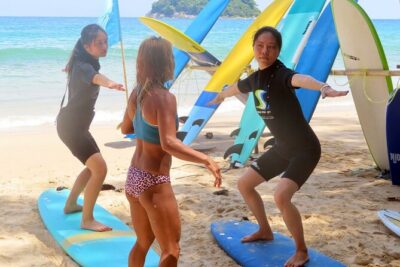
Your lesson starts with hands-on instruction on the beach. This short session covers the key movements: paddling, pushing up, bringing your feet underneath you, standing, and finding your balance.
The beach practice is not filler. It gives you a chance to repeat the pop-up without a wave pushing the board behind you. You can focus on foot placement and body position, while the instructor corrects mistakes before you enter the water.
You should pay close attention to the safety advice here. In a beginner lesson, knowing how to fall, how to handle the board, and when to wait for a wave can matter just as much as standing up. The lesson is conducted in English, and the coaches are certified.
Wear swimwear under your rash guard, apply sunscreen before the lesson, and bring a change of clothes. Sunglasses are listed among the recommended items, though you will want to keep track of them around the water. A waterproof bag is useful for your phone and other small valuables.
Into the shallow water at Kata Beach
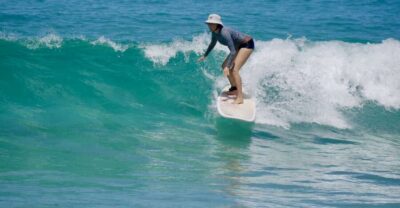
After beach training, you take the soft-top board into the ocean. The water used for beginners is shallow and manageable, generally around waist depth, so you do not need to swim out to a distant break.
That setup changes the feel of the lesson. You can concentrate on catching a small wave instead of worrying about staying afloat. It also gives the instructor a better chance to guide your board and explain what is happening as each wave approaches.
The board is a soft-top beginner model. That does not guarantee a perfect first ride, but it provides a forgiving platform for learning. Soft boards are generally easier for new surfers to handle than narrow performance boards, and they are a sensible choice when several people may be falling, kneeling, and trying to stand in the same area.
Expect repetition. You may paddle several times before the timing feels right. You may stand for only a second, or you may get a longer ride than expected. The useful part is that the instructor can adjust the advice as you go, rather than giving you one explanation and leaving you to work it out alone.
One-on-one coaching in a small group
The experience is described as a small-group lesson, with personal coaching built into the water time. That distinction matters. A large class can mean long waits between attempts, while a smaller session lets you spend more time practicing.
One useful detail comes from a booking made by four people: each person received an individual instructor. You should not assume every session will have exactly that staffing arrangement, but it shows the level of personal attention that can be available.
This is especially helpful because beginners do not all struggle with the same thing. You might need help with the pop-up. Someone else may have trouble paddling straight. Another person may stand successfully but lose balance when looking toward the beach. A coach who is watching your attempt can give a specific correction instead of repeating general advice.
The lesson also promises guidance from the first attempt. You should not treat that as a guarantee that you will stand up immediately. Waves, body size, balance, timing, and conditions all affect progress. Still, the short format is designed to get you trying real waves quickly rather than spending the entire session on dry-land instruction.
More Kata Beach bookings in Phuket:
- Kata Beach Diving for Beginners Pool Training and 1 Beach Dive
★ 5.0 · 102 reviews - Thai Cooking Class by Kata Thai Cooking School in Phuket
★ 5.0 · 21 reviews - Scuba Diving Kata Beach Night Dive for Certified Divers
★ 4.5 · 14 reviews - Aerial Yoga Class in Kata, Phuket
★ 5.0 · 12 reviews
What you will learn in 90 minutes
The lesson has a clear progression:
- Beach basics: You learn the stance, paddling motion, pop-up, balance, and safety points.
- Board handling: You get used to the soft-top board before attempting to ride.
- Shallow-water practice: You work from a waist-deep area, with the instructor nearby.
- Wave timing: You learn when to paddle and how to respond as a small wave reaches the board.
- Standing and balance: You try to move from lying down to standing and hold your position for as long as possible.
- Corrections and repeat attempts: The coach helps you adjust your technique and try again.
This is a practical introduction rather than a classroom session. You will spend much of the time moving, falling, resetting, and attempting another wave. Bring a change of clothes because even a modest surf lesson leaves you wet, sandy, or both.
At the end, you receive a freshwater rinse and towel service. That small convenience is worth noting in Phuket, where getting cleaned up before returning to your hotel can otherwise take extra planning.
The best season for your first wave
Phuket’s peak surf season runs from May through October. That period offers the most suitable waves and conditions for a beginner lesson, so I would choose those months if surfing is a major reason for booking.
Outside peak season, lessons still operate and surfing is still possible. The waves are usually gentler, however. Gentle water can be comfortable for a nervous beginner, but it may also make it harder to catch a wave with enough push to carry the board.
Your expectations should match the calendar. During the stronger surf season, you may have more chances to practice actual wave riding. In the quieter months, the lesson may focus more heavily on board control, body position, and basic technique.
The activity does not promise a particular number of rides or a guaranteed stand-up. Ocean conditions change, and no beginner lesson can control every wave. The benefit here is that the shallow-water format keeps the session accessible even when conditions are not perfect.
What the $38 price includes
At $38 per person, the lesson offers reasonable value for someone who wants a first try without buying or renting separate equipment. The price includes 90 minutes of instruction, a soft-top beginner board, and a rash guard.
You also receive a freshwater rinse and towel service afterward. Those extras do not transform the lesson, but they make the experience easier to fit into a day at the beach or a hotel schedule.
The value is strongest if you need everything arranged for you. You do not have to compare board rentals, find an instructor, or work out which equipment is suitable for a beginner. You are paying for a guided introduction, not just access to a board.
Photography is extra at 400 THB per person. If you want pictures of your first ride, this is a separate cost to plan for. If you are more interested in learning than documenting the moment, skip it and keep the price closer to the advertised rate.
Meals and drinks are not included. Bring your own water and arrange food before or after the lesson.
Meeting at Tall Tree Kata Phuket
The main meeting point is the office at Tall Tree Kata Phuket. You should arrive 15 to 20 minutes before the start time, allowing the team to organize the transfer to the beach.
If you are staying in the Kata or Karon area, you can also meet the team directly at the beach. Confirm the exact meeting details when you book, especially if you are relying on the direct beach option rather than going to the office.
This is not a long excursion with multiple stops. The value is in the focused ocean lesson, so allow extra time only for getting to the meeting point, changing, and rinsing off afterward. Check the available start times before booking, since the activity lasts 90 minutes but does not list one fixed departure time.
Who will enjoy this lesson most
This experience fits first-time surfers who want a controlled introduction. It is also a good match for families with children aged six and older, provided the child is comfortable following instructions and spending time in the ocean.
Non-swimmers are specifically accommodated through the shallow-water format. Still, shallow water is not the same as no water risk. You should be comfortable entering the ocean, listening to the coach, and following the safety rules.
I would also recommend it to adults who want an active beach experience but do not want to commit to a full day of surfing. Ninety minutes is long enough to learn the basic movements without taking over your entire Phuket itinerary.
It may not suit you if you are looking for advanced coaching, powerful waves, or a long free-surf session. It is a beginner lesson, and the soft board, shallow water, and short format are all designed around learning rather than performance.
Pregnant women and children under six should not book this activity. Smoking, alcohol, drugs, and touching marine life are not allowed.
Small details that will improve your lesson
Arrive early. The 15 to 20-minute arrival window gives you time to find the office, get organized, and avoid cutting into your water time.
Use sunscreen before the lesson, but remember that you will be wet and exposed to the sun for much of the session. Bring swimwear, dry clothes, cash, and a waterproof bag.
Keep your expectations practical. Your first goal should be learning the correct movement and staying safe, not holding a perfect pose for a long ride. A brief stand-up is still useful because it shows you how the board responds under your feet.
If you book with friends, ask how the instructor arrangement will work for your group. A four-person booking received an instructor for each person, which can make a big difference in the number of attempts and corrections you receive.
English is the listed teaching language. If you need instruction in another language, this may not be the right match.
Should you book the Kata Beach surf lesson?
Book it if you want a short, well-organized first taste of surfing with equipment, instruction, and shallow water included. The combination of 15 minutes of beach training, soft boards, one-on-one guidance, and a $38 price makes sense for a beginner who wants to try surfing without a larger commitment.
I would choose May through October for the best chance of useful waves. Outside that period, book only if you are happy with a gentler introduction and do not expect dramatic rides.
Skip it if you want advanced coaching, a full-day surf program, or a guaranteed stand-up. For a first wave at Kata Beach, especially if swimming is not your strength, this is a practical and approachable choice.
FAQ
How long is the surf lesson?
The lesson lasts 90 minutes, or one and a half hours.
Is the lesson suitable for complete beginners?
Yes. The session is designed for first-timers and covers paddling, popping up, balancing, and basic surf safety.
Do I need to know how to swim?
No swimming experience is required. Beginners practice in shallow, manageable water around waist depth.
What equipment is included?
The activity includes a soft-top beginner surfboard and a rash guard. It also includes a freshwater rinse and towel service after the lesson.
Where do I meet the instructor?
The main meeting point is the office at Tall Tree Kata Phuket. You should arrive 15 to 20 minutes before the activity. If you stay in Kata or Karon, you can also meet the team directly at the beach.
What is the best time of year for this activity?
Phuket’s peak surf season runs from May through October. Surfing is possible year-round, but conditions outside those months are generally gentler.
Can I book photos of the lesson?
Yes. In-water photography is available for an additional charge of 400 THB per person.
What is the minimum age?
The minimum age is six years old. The activity is not suitable for children under six or for pregnant women.
More classes and workshops in Phuket
- Phuket Thai Cooking Class with Market Tour Option
★ 5.0 · 2,665 reviews - Hands-on Thai Cooking Class Phuket with Market Tour Option!
★ 5.0 · 808 reviews - Thai Cooking Class in Phuket
★ 5.0 · 375 reviews - Half day Thai cooking Class + Market tour+Garden tour
★ 5.0 · 237 reviews
Newest Phuket trips reviewed
- Zipline 18 Platforms and ATV Adventure Tour From Phuket★ 4.5 · 20 reviews
- Zipline and ATV Skyline Adventure Phuket Include Pickup Transfer★ 5.0 · 11 reviews
- Phuket: Wow Andaman Snorkeling Trip to Phi Phi & Bamboo Islands★ 4.5 · 15 reviews
- Phuket City Tour: Karon View, Big Buddha & Wat Chalong (SHA Plus)★ 3.5 · 3 reviews
- White Water Rafting with Monkey Cave Experience from Phuket★ 3.0 · 3 reviews
- Phuket VIP Hype Luxury Boat Cruise with Party & DJ Vibes★ 3.5 · 3 reviews
- VIP Private Boat to Phi Phi Island: Snorkeling + Land Tour★ 5.0 · 9 reviews
- Try Scuba Diving★ 5.0 · 11 reviews
Phuket Surf Lessons, compared.

Private Surf Lesson: 1-Hour Wave-Riding on Kata Beach
Read our review →
Browse the lists this tour appears in