
Reviewed · PHUKET ELEPHANT SANCTUARY TOURS
Phuket: Guided Walk Tour to Elephant Sanctuary with Transfer
The heart of this Phuket outing is simple: you walk through a hillside forest while elephants move freely nearby, eating and socializing at their own pace. You are there to watch and learn, not to ride, bathe, or make an elephant perform. I like the calm setting and the focus on elephant body language. I also like the chance to hear about hill-tribe mahout traditions directly from caretakers.
The main drawback is the short length. Ninety minutes gives you a useful introduction, but not a full day at a sanctuary. The tour is also conducted in English only, so a German-speaking guest who wanted a German tour may have missed some of the finer points. Still, if you have limited time in Phuket, this is a tidy and respectful way to meet elephants.
Key points to know before you go
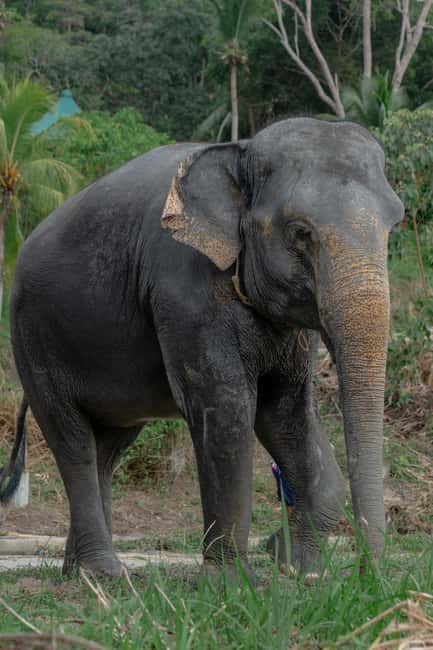
- Free-roaming elephants: You observe elephants in a hillside jungle setting rather than watching a staged show.
- A lesson before an encounter: The program explains captive and wild elephants, their behavior, and their daily care.
- Hill-tribe caretaker insight: You learn about mahout traditions and the people who look after the elephants.
- A short, focused visit: The guided program lasts 90 minutes, with about 20 minutes of van travel listed in the schedule.
- Hand-feeding comes last: You offer the elephants treats at the end, after learning how to approach them responsibly.
- Pickup needs care: Optional hotel pickup covers Patong, Kata, Karon, Phuket Town, Kamala, Surin, Bang Tao, and Laguna, but late arrivals can be treated as no-shows.
A quiet elephant encounter in Phuket
Many elephant activities in Thailand are built around spectacle. This one takes a quieter route. You begin with an introduction to the elephants and their backgrounds, then follow forest paths while the animals eat, walk, and interact without being asked to perform.
That difference matters. You are not promised a dramatic show or a guaranteed close-up at every moment. Instead, the point is to see elephants behaving as elephants. They may pause, wander, feed, or remain a little farther away. That uncertainty is part of a more respectful encounter.
The setting is the Patong Hill Tribe Elephant Village, described as an ethical elephant sanctuary in Phuket. The experience provider links the visit with conservation and responsible elephant tourism. You should still arrive with sensible expectations: this is a short educational program, not a full examination of Thailand’s elephant industry.
The strongest part is the balance between information and observation. You hear about captive elephants, learn how they differ from wild elephants, and then see some of those ideas in practice as the animals move through their hillside habitat.
More elephant sanctuary visits in Phuket:
- Phuket: Elephant Jungle Sanctuary Ethical Feeding Experience
★ 4.8 · 4,359 reviews - Phuket: Elephant Sanctuary Guided Tour with Hotel Transfers
★ 4.8 · 2,020 reviews - A Morning with the Elephants at Phuket Elephant Sanctuary
★ 5.0 · 1,693 reviews
The 20-minute ride and arrival
Depending on the option you select, you either meet at a designated starting point or arrange hotel pickup. The listed transport segment takes about 20 minutes by van. Pickup is available from Patong, Kata, Karon, Phuket Town, Kamala, Surin, Bang Tao, and Laguna.
That transfer is useful if you are staying in one of the named areas. It saves you from arranging a separate taxi and makes the experience easier to fit into a busy Phuket day. The tradeoff is that this is not necessarily a private door-to-door service from every hotel on the island. If your accommodation lies outside the pickup areas, choose the meeting-point option.
If you use hotel pickup, wait in the lobby at least 10 minutes before the scheduled time. This is important. The instructions are strict: arriving more than 10 minutes late, or turning up after the group has left the hotel, can mean being treated as a no-show.
The transfer is not the main event, but timing can make or break a short tour. Give yourself extra time to get ready, find the lobby, and confirm the pickup point. Phuket traffic can be uneven, and a late start cuts into a 90-minute program quickly.
Learning before walking
The visit opens with an education session. You learn how the elephants came to live at the sanctuary, what daily life looks like, and how captive elephants differ from wild elephants.
This background gives the walk some purpose. Instead of seeing only a large animal in a pretty setting, you begin to understand the conditions that shape its behavior. The guide also explains elephant body language, social interaction, and natural feeding habits.
The English-speaking guide helps connect the facts to what you see on the path. Toni received specific praise for being attentive and going beyond the basic program, so if Toni leads your session, you can expect a guide who takes the educational side seriously. Guide assignments can vary, so do not assume Toni will be present every time.
The English-only format is worth noting. If you need a German-language tour, this is not the right match based on the available information. You can still ask questions in English and follow the main ideas, but complex explanations about animal behavior may be harder if English is not comfortable for you.
Walking the hillside forest trails
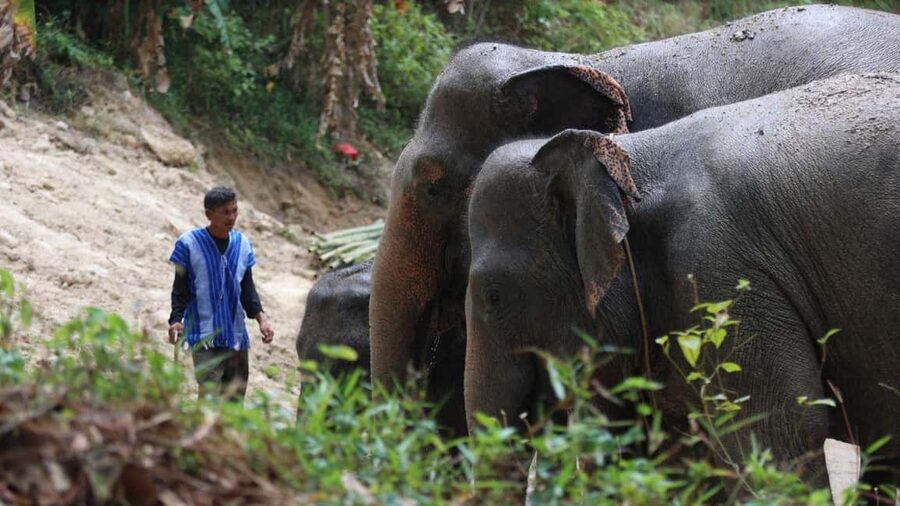
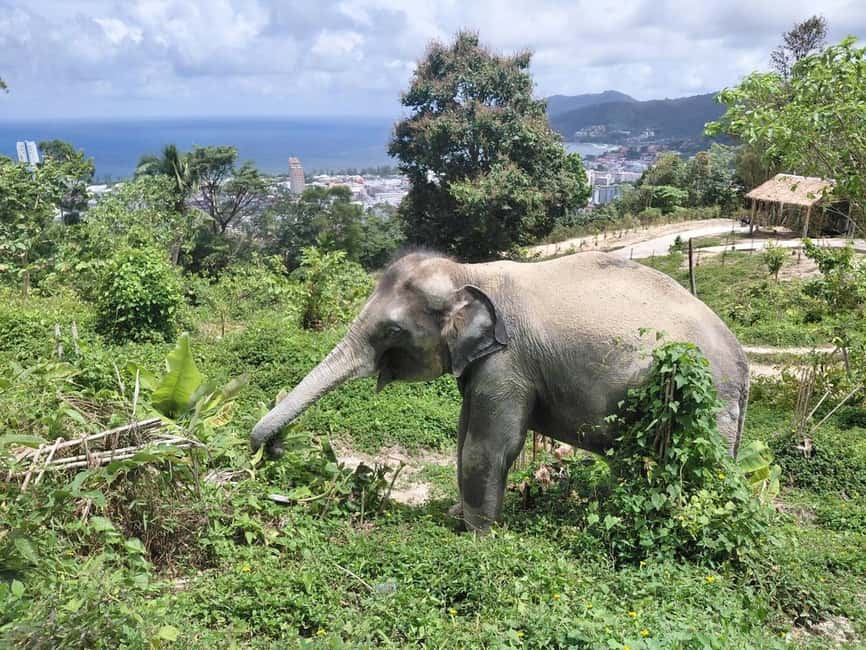
After the introduction, you walk with the elephants along the sanctuary’s forest trails. This is not presented as a strenuous hike, but you should wear comfortable shoes because the activity takes place outdoors on hillside paths.
The walk is designed around observation. You may see elephants feeding naturally, moving through the trees, or interacting with one another. The guide points out behavior and body signals so you can read more into the encounter than simply big animal, nice photo.
The hillside setting also changes the pace. You are not standing in a fixed viewing area waiting for a scheduled trick. You follow the elephants and the guide, allowing the visit to feel calmer and less staged. The animals’ freedom to roam is one of the most appealing details of the program.
That freedom also means the experience may not deliver constant action. Elephants do not follow a tour timetable. If you want a guaranteed sequence of close encounters, this may feel too restrained. If you prefer watching animals make their own choices, the slower pace is a strength.
Bring sunscreen, insect repellent, a hat, and water. Drinking water is provided, but the instructions ask you to bring a reused bottle. Comfortable clothing and shoes will serve you better than anything designed only for photographs.
More walking tours in Phuket:
- Phuket:Beach walk with elephants, rain & care. 2.5 hours
★ 4.9 · 969 reviews - Phuket: Bukit Elephant Park Sanctuary Walk and Feed Tour
★ 4.9 · 926 reviews - World B+ (Zipline 18 Platforms + Roller + Sky Walk with World Set Menu )
★ 5.0 · 218 reviews - World A+ (Zipline 32 Platforms + Roller + Sky Walk with World Set Menu )
★ 5.0 · 215 reviews
Meeting the caretakers and learning mahout traditions
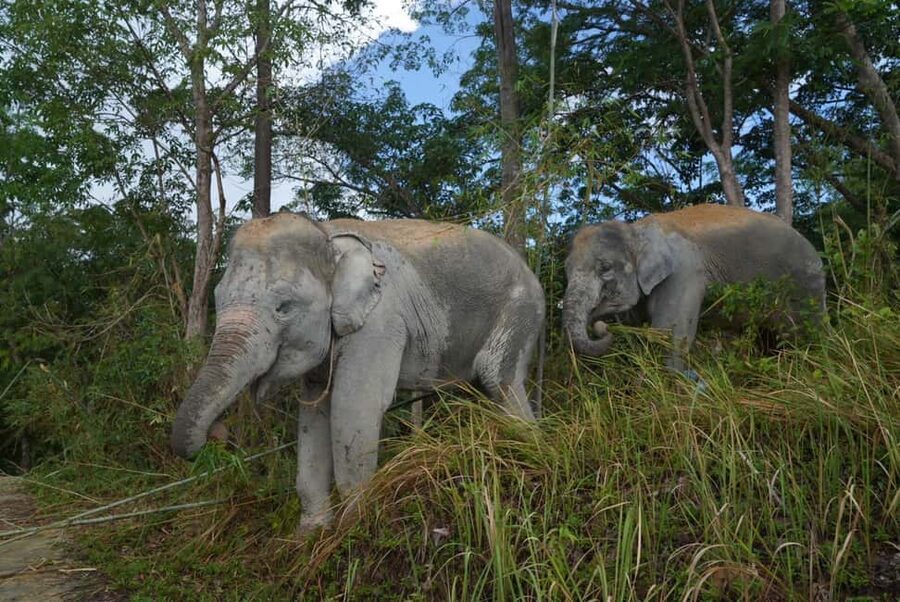
The program includes insight from hill-tribe caretakers, with attention to mahout traditions. A mahout is an elephant caretaker, and this part helps explain the human side of elephant care in Thailand.
That context is valuable because captive elephants depend on people for food, medical attention, protection, and daily management. You get a clearer picture of the bond and responsibility involved, rather than seeing the animals as scenery for a quick photo.
The phrase hill-tribe tradition should not be treated as a decoration. It points to the knowledge and customs connected with people who have worked with elephants over generations. The program uses that perspective to explain how caretakers understand the animals and manage contact with them.
You should also keep the scope in mind. A 90-minute activity can introduce these traditions, but it cannot explain every part of elephant care or Thailand’s complicated history with working elephants. Think of this as a well-focused introduction, not a complete cultural study.
Hand-feeding at the end
The final part lets you hand-feed the elephants their favorite treats. Placing this activity at the end is sensible. By then, you have received guidance about behavior and body language, walked alongside the animals, and had time to understand the setting.
Hand-feeding is likely to be the most interactive moment, and it gives you a close connection without riding or handling the elephants in a forceful way. Follow the guide’s instructions carefully, keep movements calm, and let the caretakers control the interaction.
This is also the best point to take photographs, provided you can do so without crowding the animals. Bring a camera, but do not let the camera become the whole reason for the visit. The animals are the focus, and the program’s value comes from observation and education as much as from pictures.
Because the elephants move freely, the feeding portion may have its own pace. You might get a direct moment with an elephant, while another animal may remain occupied elsewhere. That is a fair trade for a setting that does not treat the elephants like actors on a stage.
What the $51 price buys you
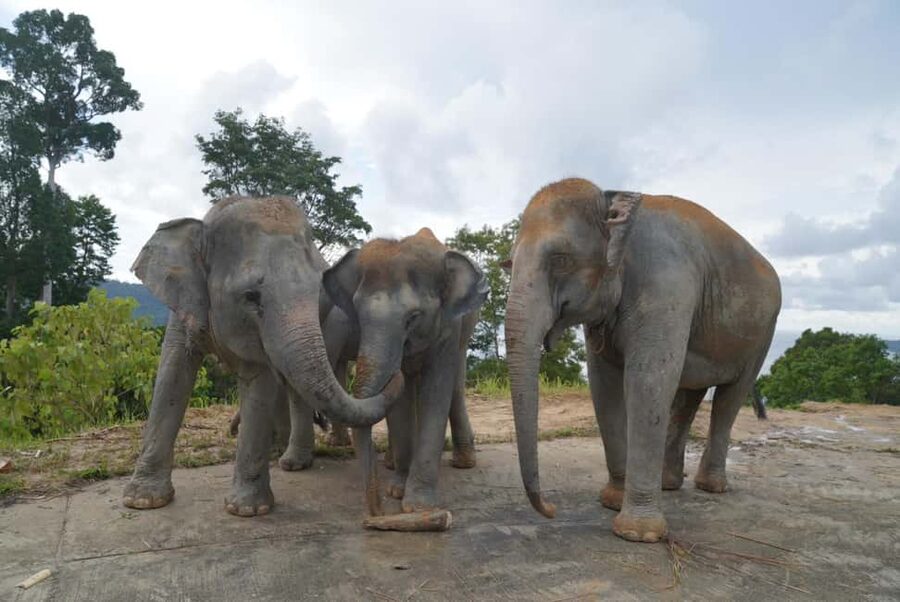
At $51 per person, the activity sits in the affordable middle range for a guided elephant encounter in Phuket. You are paying for a 90-minute guided visit, transport in the program structure, an educational session, caretaker insight, drinking water, insurance, and the elephant walk with hand-feeding.
The value is strongest if you use the hotel pickup option from one of the covered areas. A separate taxi can add cost and planning, so the included transfer arrangement may make the total easier to manage. Read the selected option carefully, though, because the details distinguish between optional pickup and meeting-point arrangements, and the general information also says round-trip transfers are not included.
The short duration keeps the price manageable and suits a packed Phuket schedule. You could fit it around other plans instead of giving up an entire day. The downside is that $51 buys an introduction, not a long sanctuary visit with several extended activity periods.
I would consider it good value if your main goals are learning, walking, and seeing elephants in a natural hillside setting. I would look elsewhere if you want a full-day conservation program, extensive keeper interaction, or a long period of observation.
Who should book this experience

This outing suits adults and children aged six and older who can manage an outdoor walk and follow instructions around large animals. The program is described as safe, educational, and interactive for all ages, but children under six cannot join.
It works especially well for:
- People who want an ethical alternative to elephant riding or shows
- Visitors with only a morning or afternoon available
- First-time visitors who want a basic understanding of elephant care
- Families with children old enough to listen and stay calm
- Photographers who value natural behavior more than posed animal shots
- Anyone staying near the listed pickup areas
You may want to choose another activity if you are pregnant, have back problems, or need wheelchair access. The information is inconsistent here: the activity details call it wheelchair accessible, but the restrictions say it is not suitable for wheelchair users. Contact the provider before booking if this affects you, rather than relying on the general accessibility label.
The same caution applies to anyone with limited mobility. Forest paths and hillside terrain can be less predictable than a paved attraction, even if the program has some accessibility provisions.
Practical details that affect your day
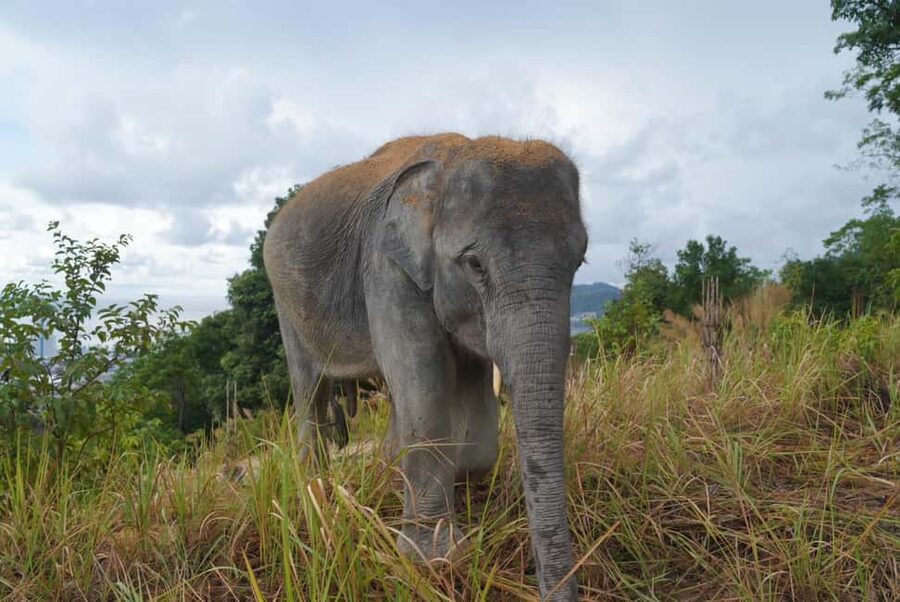
The activity is offered in English and lasts 90 minutes. Starting times vary, so check availability for the date you want. Pickup is optional, and the covered areas include Kamala Beach, Kalim Beach, Tri Trang Beach, Karon, Bang Tao, Old Phuket Town, Kathu, Phuket, Patong, and Kamala, along with the broader hotel zones listed for pickup.
The location names overlap in places, so read the exact option before paying. If your hotel is outside the stated areas, use the meeting-point choice instead of assuming a transfer will be arranged.
Wear comfortable shoes, a hat, sunscreen, and insect repellent. Bring water in a reusable bottle, since drinking water is provided but the instructions still ask you to carry your own bottle. Smoking is not allowed.
The cancellation terms are friendly: you can cancel up to 24 hours before the activity for a full refund. You can also reserve now and pay later, which helps if your Phuket plans are still shifting.
What makes the ethical focus meaningful
The experience presents responsible contact as a matter of behavior, not just a label. You learn how elephants live, walk beside them instead of riding them, and watch them feed and interact without a performance schedule.
That approach is important in Thailand, where elephant tourism has a complicated past and present. A responsible visit should give the animals room to make choices, reduce forced contact, and help you understand the people who care for them.
No short excursion can answer every question about conservation, funding, veterinary care, or the long-term future of captive elephants. You should ask the guide questions if those issues matter to you. The program gives you a starting point, especially through its explanation of captive versus wild elephants and its focus on caretaker traditions.
I like that the experience keeps the human and animal stories together. You learn about the elephants’ lives and the people responsible for them, rather than treating the sanctuary as a simple photo stop.
Should you book the 90-minute elephant walk?
Book it if you want a short, calm, educational encounter with elephants and prefer observation over shows, rides, or forced tricks. The free-roaming setting, guided forest walk, caretaker insight, and final hand-feeding make good use of a limited amount of time.
Skip it if you want a full-day sanctuary visit, a German-speaking guide, or a detailed conservation course. Also confirm accessibility in advance if you use a wheelchair or have mobility concerns, since the information gives conflicting guidance.
For most visitors staying near Patong, Kata, Karon, Phuket Town, Kamala, Surin, Bang Tao, or Laguna, this is a practical choice. Keep your schedule loose enough for the transfer, arrive early, wear proper shoes, and let the elephants set the pace. That is the whole point.
FAQ
How long does the elephant sanctuary experience last?
The guided program lasts 90 minutes. The listed itinerary also includes about 20 minutes of van transport.
What happens during the tour?
You receive an elephant education session, learn about captive and wild elephants, walk through forest trails with the elephants, observe their behavior, hear from hill-tribe caretakers, and hand-feed treats at the end.
Is hotel pickup available?
Yes. Optional pickup is available from Patong, Kata, Karon, Phuket Town, Kamala, Surin, Bang Tao, and Laguna, along with the listed Phuket-area locations.
What if my hotel is outside the pickup area?
Choose the meeting-point option if your hotel is outside the stated pickup locations.
What language is the tour conducted in?
The live tour guide speaks English. No German-language option is listed.
Can children join the tour?
Children under six cannot join. The experience is described as suitable for all ages above that restriction, provided participants can follow the instructions.
Can I hand-feed the elephants?
Yes. Hand-feeding the elephants their favorite treats takes place at the end of the program.
What should I bring?
Bring comfortable shoes, a hat, sunscreen, a camera, water, and insect repellent. You are also asked to bring a reused bottle.
Are round-trip transfers included?
Pickup is optional, and the transfer details depend on the option selected. If your hotel lies outside the listed pickup area, you need to use a meeting point. Check the exact transfer choice when booking.
Can I cancel the booking?
Yes. You can cancel up to 24 hours in advance for a full refund. Reserve now and pay later is also available.
Newest Phuket trips reviewed
- Zipline 18 Platforms and ATV Adventure Tour From Phuket★ 4.5 · 20 reviews
- Zipline and ATV Skyline Adventure Phuket Include Pickup Transfer★ 5.0 · 11 reviews
- White Water Rafting with Monkey Cave Experience from Phuket★ 3.0 · 3 reviews
- Phuket: Wow Andaman Snorkeling Trip to Phi Phi & Bamboo Islands★ 4.5 · 15 reviews
- Phuket City Tour: Karon View, Big Buddha & Wat Chalong (SHA Plus)★ 3.5 · 3 reviews
- Phuket VIP Hype Luxury Boat Cruise with Party & DJ Vibes★ 3.5 · 3 reviews
- VIP Private Boat to Phi Phi Island: Snorkeling + Land Tour★ 5.0 · 9 reviews
- Half day Tropical Coral Island Snorkeling Tour from Phuket★ 4.5 · 12 reviews
Phuket Elephant Sanctuary Tours, compared.
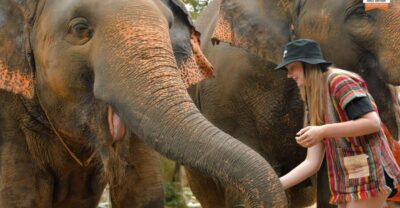
Elephant Jungle Sanctuary Ethical Feeding Experience
Read our review →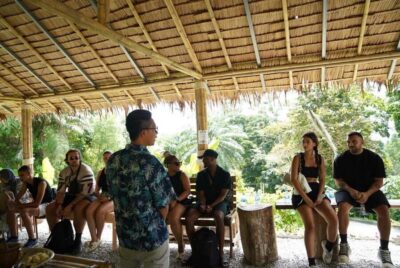
Elephant Sanctuary Guided Tour with Hotel Transfers
Read our review →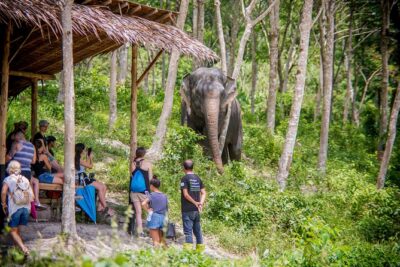
A Morning with the Elephants at Phuket Elephant Sanctuary
Read our review →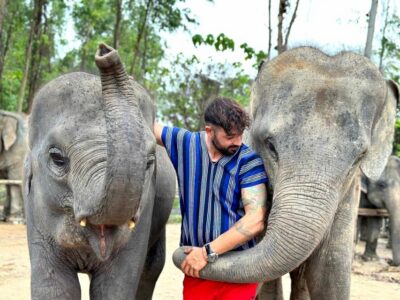
Elephant Experience with Lunch or Dinner and Pickup
Read our review →
Elephant Jungle Sanctuary Feed and Shower Trip
Read our review →
Beach walk with elephants, rain & care. 2.5 hours
Read our review →
Bukit Elephant Park Sanctuary Walk and Feed Tour
Read our review →
Browse the lists this tour appears in